"A Lot of Concierge Practices Don't Really Deliver on That Promise": Dr. Nathan Starke on Why the Model Often Fails Patients
The pitch for concierge medicine is easy to like. Pay your doctor directly, cut out the insurance bureaucracy, and get the kind of access that used to be ordinary. No three-month wait. No rushed visit. No portal message answered next Thursday by somebody who isn't your physician.
Dr. Nathan Starke believes in that pitch. He also thinks most practices selling it don't deliver on it.
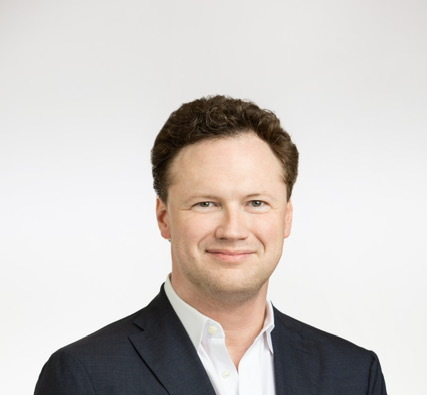
Dr. Starke is a fellowship-trained urologist and men's health specialist who founded Starke Medical, his own Houston concierge practice. He has watched the model from the inside as a physician and from the outside as a patient. His assessment is unusually direct for somebody who now sells the service.
Start with what he thinks is broken about ordinary care, because that's the problem concierge medicine was invented to answer.
"Most people's experience with medicine in the modern age is very frustrating," he says. "Long waits for appointments. I remember at some point it was three to four months to come see me, at minimum. Long waits, rushed visits, a doctor who's got 17 other patients to see, and that's only that morning or afternoon."
The promise was that paying directly would fix all of it.
"Concierge medicine, in theory, was supposed to fix a lot of those headaches," Dr. Starke says. "And the model, again, theoretically sounds good. You pay directly, skip the insurance bureaucracy, and get better access to your physician."
Then comes the part that isn't in the brochure.
"Based on my observation in talking to lots of patients of mine, friends and colleagues, other physicians, a lot of concierge practices don't really deliver on that promise."
The conversion problem
The failure Dr. Starke describes is one of inheritance rather than intent. Most concierge practices were never designed as concierge practices to begin with. They were ordinary offices that added a fee.
"They are often traditional offices that sort of converted into a concierge model, added a membership fee, but the experience often isn't meaningfully different," he says.
He lists the symptoms with the specificity of somebody who has heard them from patients repeatedly. "Patients still wait weeks, at least, for appointments. Calls are handled by staff rather than the doctor. You still can't get the doctor on the phone, which is nearly impossible with a traditional doctor's office, I'm sure many have noticed. And simple requests sometimes require an in-person visit that maybe didn't need to happen, getting antibiotics or whatever it might be."
Which produces the outcome that makes the whole arrangement feel like a bad trade. "Patients end up paying more without feeling a whole lot closer to their doctor," Dr. Starke says, "which was sort of the point to begin with."
Why good doctors rebuild the system they left
The most interesting part of Dr. Starke's critique is that he doesn't blame physicians experiencing burnout. He knows them.
"I've noticed colleagues, honestly, many colleagues of mine from previous hospitals that I've worked at recently, would leave and go concierge and gradually recreate the same system they'd left," he says. "Because that's all we've ever known."
That's a structural observation rather than a character judgment. A physician who has spent 15 years inside a volume-driven institution has absorbed a full set of defaults: the front desk that fields calls, the schedule template built around throughput, the assumption that any request becomes an appointment. Drop the insurance contracts, add a membership fee, and every one of those defaults survives the transition untouched.
What changes is the billing. Almost everything the patient experiences was inherited from the old office.
The test: can you call your doctor?
Dr. Starke's own standard is deliberately simple, and any prospective patient can verify it with one phone call.
"My patients, every single one of them, has my cell phone number and reaches me directly," he says. "There's no front desk between my patients and their care, and I handle things directly myself."
That last clause carries the whole design. The patient and the physician, with nothing sitting in between.
"I wanted to build something from the ground up that actually reflects what I think this model is supposed to be," he says. "Genuinely accessible and really patient-first and patient-centric."
Questions worth asking before you pay
Dr. Starke's critique translates into a short due-diligence list. None of it requires medical knowledge to evaluate.
How do I reach you? If the answer routes through a front desk, a portal, or an answering service, the fee is buying priority inside an old system rather than access to a new one.
How long until I'm seen? A practice that still books weeks out has kept the exact constraint patients were paying to escape.
Who answers the phone? Dr. Starke's specific complaint is that calls get handled by staff rather than the physician. Ask who is on the other end.
Does a simple request require a visit? Refills and routine questions that force an in-person appointment suggest the schedule is running the practice.
How many patients do you carry? This one follows from his diagnosis rather than from anything he says outright. Direct access at scale is arithmetic, and a panel sized for volume will behave like volume medicine whatever the website says.
The model itself is sound in Dr. Starke's view. Execution is where it usually comes apart. That's why he reaches for the phrase from the ground up when describing his vision for Starke Medical, and why he's so specific about having watched what happens to practices that don't start there.


Comments