"Every Year, Doctors Are More and More Tired": Dr. Nathan Starke on Burnout, Balance, and Why Medicine Needs a Reset
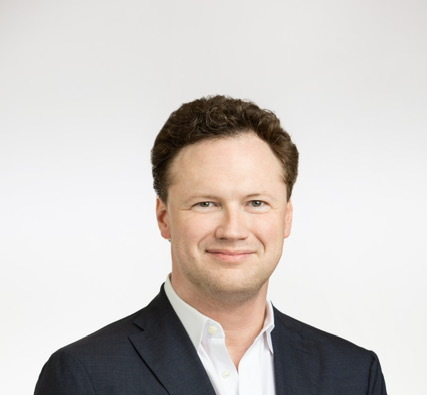
Dr. Nathan Starke is not the kind of physician who sugarcoats things. When he talks about medicine — the work, the rewards, the grind, and the cracks in the system — he does it the same way he talks to patients in the exam room: directly, candidly, without much patience for pretense.
So when he describes the state of physician burnout in America, it lands with some weight.
"Every year, doctors are more and more just tired of the system," he says.
That's not cynicism for its own sake. It's the honest assessment of a physician who spent years building one of Houston's premier men's health programs, developed a passion for medical innovation, and ultimately found himself navigating a career evolution that very few doctors are willing to talk about openly. Dr. Starke is willing to talk about it.
The Job Nobody Tells You About
From the outside, being a surgeon looks extraordinary. And in many ways, it is. Dr. Starke trained at top programs in the country — Vanderbilt, Baylor College of Medicine, UT Southwestern, the University of Virginia — and built a specialty in urology and andrology that required years of dedicated, high-level training. He came back to his hometown and became the founding director of the Men's Health Center at Houston Methodist.
By any measure, that's an exceptional career trajectory.
And yet.
"Even though most people might think, 'You do surgery every day — that's pretty exciting,'" he says, "just like any other job, ultimately it's kind of like a job. It's the same thing over and over, and it gets pretty monotonous."
That’s not to say the good parts of the job ever wear off. The satisfaction of improving a patient's quality of life — resolving sexual dysfunction that's quietly been eroding a marriage, treating infertility that's causing real grief, addressing pain or discomfort that a man has been enduring alone for years — that part never lost its meaning. But the national healthcare system surrounding that work is another story.
"The healthcare framework that we work in is a catastrophe," he says flatly.
Burnout Is Not a Character Flaw
Physician burnout improved slightly after the pandemic, but physicians' collective mental health is still not in a great place. Administrative burdens, insurance paperwork, electronic health record systems that consume hours of time that used to go to patients, productivity quotas that reduce medicine to a volume game — these aren't complaints about medicine itself. They're complaints about the architecture that medicine has been forced into.
The problem with framing burnout as a personal failure — a lack of resilience, a weakness in the individual — is that it puts the burden on the wrong place. Dr. Starke doesn't frame it that way. He talks about it as a structural reality that smart, dedicated, deeply trained people are running up against, and that honesty is part of what makes him a useful voice on the subject.
Finding Something New to Love
For Dr. Starke, the turning point came through an unexpected door. A colleague connected him with Vivifi Medical, a company developing a new surgical device and procedure for men with enlarged prostate. The work required skills in robotic surgery and microvascular surgery — areas that happened to be in Dr. Starke's wheelhouse — and he joined as Chief Medical Officer in 2021.
The experience changed things.
"It completely reinvigorated my passion for medicine," he says. "In a very different way."
What he found on the industry side was a different kind of challenge — and a different kind of reward. He worked with engineers to refine surgical devices. He designed protocols, operated in cadaver labs, and helped shape a new approach to a common problem. He sat in pitch meetings with investors and made the case for why the technology mattered. He used his brain differently.
"I got to help innovate and design surgeries, write protocols, work with engineers to fine-tune products, go to pitch meetings with investors," he says.
It wasn't a rejection of clinical medicine. Dr. Starke still values patient care and plans to maintain a clinical practice in some capacity. But the experience clarified something important: there are multiple ways to make a meaningful contribution to medicine, and not all of them look like seeing patients five days a week.
What Physicians Considering Industry Need to Know
For doctors thinking about moving beyond pure clinical practice — whether into biotech, medtech, health policy, or something else entirely — Dr. Starke offers a perspective that's more practical than inspirational.
The transition worked for him partly because of timing and partly because of fit. The Vivifi role overlapped naturally with his clinical expertise, which meant he could bring real credibility to the table. He wasn't a physician lending his name to a company — he was an operating surgeon who could go into the lab and actually do the work.
"It sort of was a natural fit," he says. "The Chief Medical Officer role was not a huge time commitment, and it overlapped with my clinical interests."
But the deeper lesson isn't about the mechanics of the transition. It's about permission — the permission to acknowledge that the current structure of clinical medicine isn't working for everyone, and that exploring a different path isn't giving up. It's adapting.
Dr. Starke is increasingly drawn toward the innovation side of healthcare: AI, biotechnology, the intersection of medicine and engineering. He describes this not as leaving medicine but as expanding what medicine can mean for someone with his background.
The System Needs to Change — But So Does the Conversation
Dr. Starke doesn't claim to have all the answers for fixing physician burnout, and he's appropriately skeptical of easy solutions. But he does think the conversation needs to be more honest.
Doctors are trained to project competence and certainty. Admitting exhaustion, disillusionment, or a desire to do something different can feel like a professional liability. It shouldn't be.
"I was drawn more and more toward the innovation, biotech, the new stuff," Dr. Starke says of his own evolution. "And more and more disenchanted with what I had already, at least in my view, sort of achieved at the highest level that I wanted to."
That's a remarkably candid thing for a high-achieving physician to say. And it points toward something important: sustainable careers in medicine — or in any demanding field — require honest self-assessment. They require the willingness to ask not just "am I good at this?" but "is this still the right thing for me?"
Dr. Starke's career is still evolving. He's still interested in practicing and contributing to research and medical education. But he's also building something new, and he's doing it with the same directness and energy that made him effective in the clinic.
The system may be broken in a lot of ways. But the physicians working within it — and around it — are still finding ways to move forward.


Comments